What is a Homeschool Letter of Intent?
A Homeschool Letter of Intent is a formal notice submitted to the appropriate educational authorities to inform them that a kid will be homeschooled as opposed to attending a standard school.
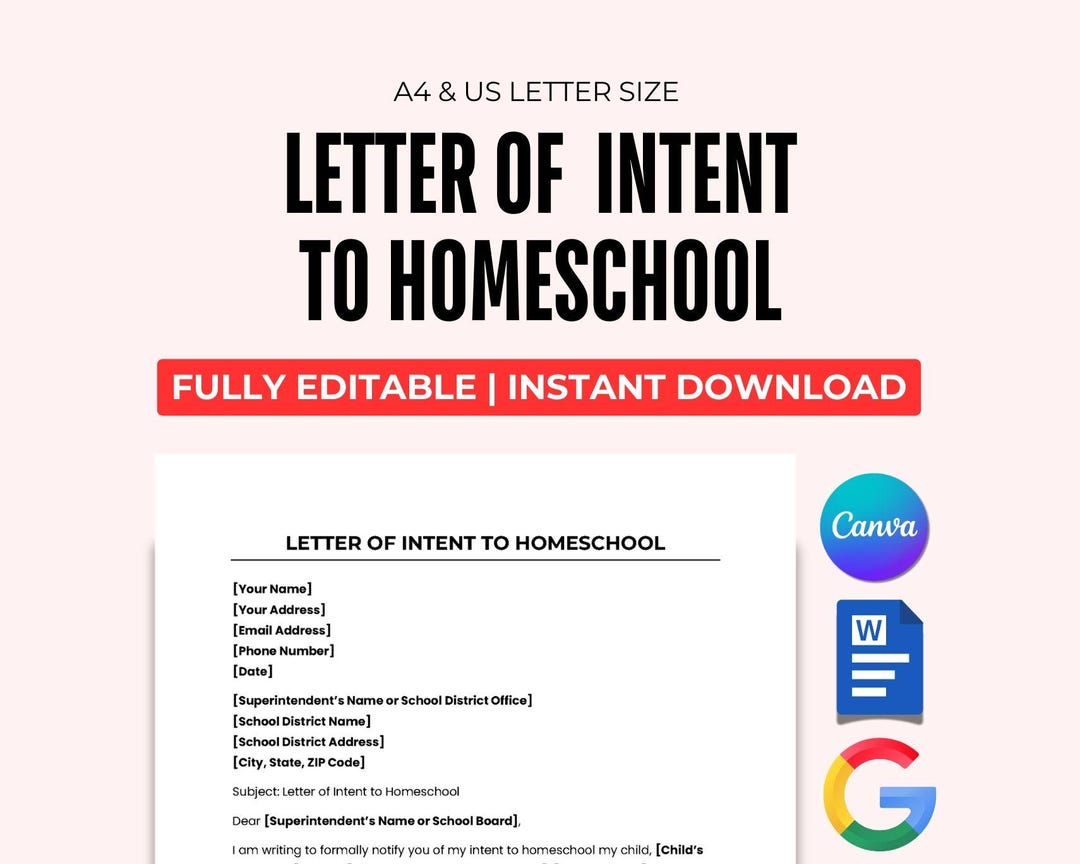
This file works as a main statement and makes sure that homeschooling is performed in conformity with state legislations. The letter generally consists of details such as the youngster’s name, birth date, parent/guardian details, and an assurance that the homeschooling educational program will satisfy educational standards.
Why is a Homeschool Letter of Intent Important?
A letter of intent to homeschool is necessary due to the fact that it:
- Meets Lawful Needs: Many states require parents to notify regional or state education and learning authorities before homeschooling.
- Protects Against Legal Issues: Failing to send the notice might cause truancy complaints.
- Clarifies Educational Duty: Establishes that parents are taking full obligation for their child’s education.
- Secures Parents and Trainees: Serve as an official document to avoid unnecessary conflicts with college districts.
Submitting a homeschool letter of intent makes sure a smooth transition from public schooling to home-based education.
Who Demands to Submit a Letter of Intent for Homeschooling?
A homeschool intent letter is required for:
- Parents transitioning their kids from public/private schools to homeschooling.
- Family members moving to a brand-new state with various homeschooling regulations.
- New homeschooling moms and dads that have to inform neighborhood education authorities.
by link Rhode Island Declaration of Intent to Homeschool website
Despite your area, it’s important to check specific state homeschooling regulations to establish whether you need to submit a homeschool notification.
When Should You Send a Homeschool Letter of Intent?
The submission due date differs by state, but usually:
- Some states require the letter to be filed at the start of the academic year (e.g., Texas, Florida).
- Others permit submission at any type of point throughout the school year when transitioning to homeschooling.
- Particular states mandate yearly revival of the letter of intent.
Parents need to confirm their state’s homeschool guidelines to prevent non-compliance.
How to Compose a Homeschool Letter of Intent?
Composing a homeschool intent letter is straightforward. Adhere to these steps:
- Consist Of Parent/Guardian Details: Full name, address, and contact information.
- Give Trainee Information: Kid’s full name, birth day, and grade level.
- State Your Intent to Homeschool: Clearly state that you plan to homeschool your youngster in compliance with state regulations.
- Define the Homeschooling Educational Program (If Required): Some states require an outline of subjects covered.
- Consist of a Guarantee of Educational Conformity: Verify that homeschooling will satisfy academic needs.
- Send the Letter to the Correct Authority: Depending on your state, it might be the college area, state education board, or superintendent.
- Maintain a Copy for Your Records: Constantly maintain an authorized duplicate of the letter.
Secret Parts of a Homeschool Letter of Intent
A legally compliant homeschool notice of intent must include:
- Header with Parent and Youngster Particulars
- Declaration of Intent to Homeschool
- Details on the Educational program (if called for by state)
- Statement of Educational Responsibility
- Signature of the Parent/Guardian
- Entry Day
Making use of a homeschool letter of intent layout guarantees you satisfy all lawful needs effortlessly.
Legal Demands for a Homeschool Letter of Intent (By State)
Various states have differing regulations regarding homeschool documents. Right here are some vital requirements:
- Texas: The letter must confirm that homeschooling will be carried out in a “” authentic”” manner.
- New York City: Moms and dads have to file a Letter of Intent and submit an Individualized Home Direction Plan (IHIP).
- Florida: Requires a Notification of Intent to Homeschool, together with an annual examination.
- Illinois: No formal letter of intent is required, yet keeping a document of homeschooling is recommended.
Always describe your state’s Department of Education web site for updated homeschool policies.
Typical Challenges in Creating a Homeschool Letter of Intent
- Not knowing the lawful requirements of the state.
- Forgetting to consist of required details like curriculum or parent information.
- Delays in entry bring about compliance issues.
Moms and dads must ascertain state regulations and make use of a pre-made homeschool letter of intent template to prevent mistakes.
Ideal Practices for Submitting a Homeschool Letter of Intent
- Submit the letter promptly to prevent disturbances in your youngster’s education.
- Follow the format called for by your state (some need notarization).
- Maintain documents of all homeschool-related records for future referral.
- Send out the letter by means of licensed mail to have proof of submission.
Advantages of Having a Homeschool Letter of Intent
- Guarantees legal conformity.
- Secures homeschooling legal rights.
- Simplifies communications with neighborhood education and learning authorities.
- Offers a main document for future instructional changes.